
When the Fire Comes Closer: Living in the Age of Climate Disasters
In January 2025, as the wildfires swept through Los Angeles, a tweet went viral that said: “Climate change will manifest as a series of disasters viewed through phones with footage that gets closer and closer to where you live until you’re the one filming it.”
I have been thinking about that tweet this August, as a friend in France shared his son’s phone video of his neighbor’s house burning down near Bordeaux. A few days earlier, I heard news of a wildfire in the hills above my former home town in Wales, UK, that had been raging for 10 days. The landscape there is normally green and lush but is now desiccated and burnt after an historic drought and four unprecedented heatwaves.
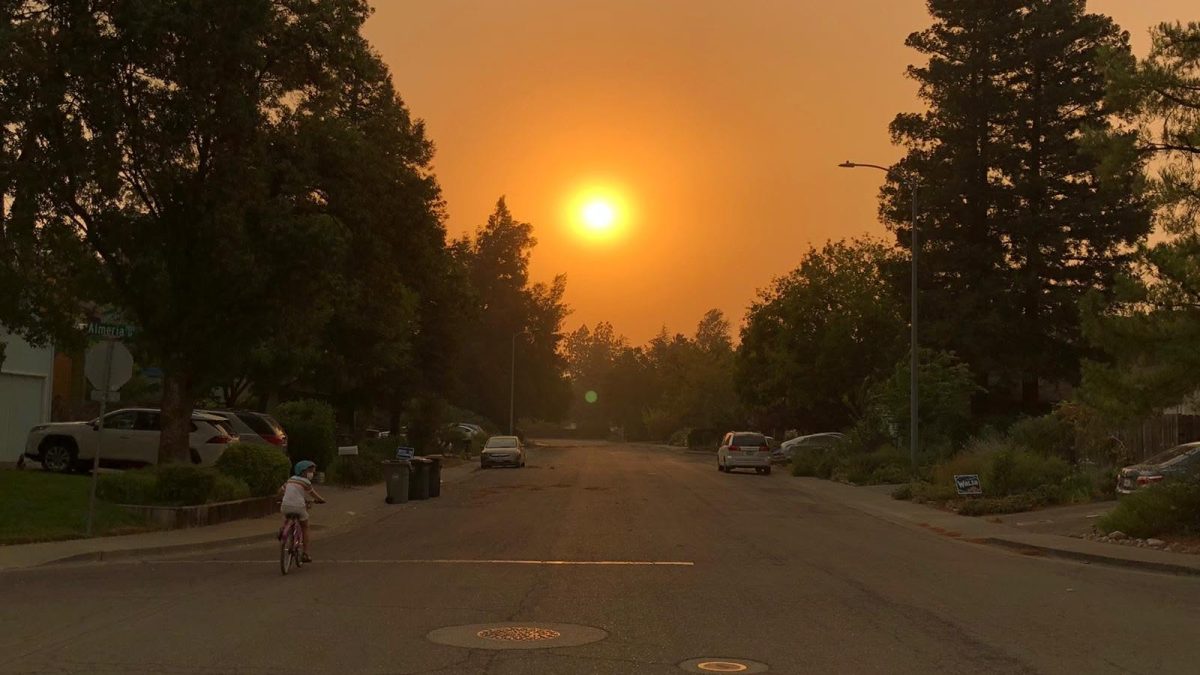
Here in Davis, we have our own recent experiences of wildfires in 2020 (LNU Lightning Fire Complex) and 2018 (County Fire in Berryessa). I remember the strangely beautiful yet ominous dusty orange skies as I watched my child cycle down my street and wondered about the future ahead of her. I remember as well talking to a young woman, Carol, who had fled for her life from Paradise in the Sierra foothills where 85 people died in a horrendous fire in 2018. She had found a house and refuge here, but told me how losing her home had made it hard “to be attached to anything, to connect to where I live or to attach to the community I am part of because it could all be gone tomorrow.”
Climate fueled fires
Speaking on the European wildfires and heatwaves, Dr. Theodore Keeping, an extreme weather research associate at Imperial College London says these events “would not have been possible without climate change.’ He explained that the two degree Fahrenheit increase in global temperatures in the last 50 years had dramatically increased the probabilities of dangerous wildfires and heatwaves worldwide.
I used to think that as climate change moved from being an abstract phenomenon to one that we could see with our own eyes and experience directly that it would necessarily lead to political change and effective action to end the use of fossil fuels. My job as a communicator was therefore to tell the stories that connected how the scientific process of increased carbon in the atmosphere as a result of burning fossil fuels has real life impacts of extreme heat, devastating floods, wildfires and droughts. I assumed that awareness of this reality would lead to policy change. I knew of course that fossil fuel companies would fight tooth and nail against this, but I also believed that popular awareness and pressure would ultimately outnumber them.
Yet we know now that we may hear news of climate disasters from friends; we may even see it with our own eyes. But that doesn’t necessarily translate to climate action. Indeed there is a danger as this increases, that we become inured to its impact or feel a sense of hopelessness, paralyzed by fear into inaction. Fossil fuel companies have made the most of the lack of a powerful focused climate justice movement to pursue business-as-usual, making record profits year after year.
Meanwhile there is a pernicious tendency by figures like Trump to respond to the anxiety and uncertainty caused by these events to deliberately do the things that are known to worsen the climate crisis. This culture of nihilistic denialism and crass rage-baiting is what is driving much of the extreme right, particularly in the online world. It’s an attempt to replace feelings of anxiety with gestures of empty bravado and power.
From powerlessness to taking power
So what am I or what are we to do? I am still trying daily to work that out, as I am sure you are. I face a constant internal battle between grief, fear, anger and determination.
However I think we need to start with acceptance – that climate change is already here and will become ever more present in our lives and those we know and love, and those we don’t know. Acceptance doesn’t mean we can’t do anything or that nothing counts. Indeed it demands to take the challenge seriously. Every action we take to reduce our own and our community’s greenhouse gas emissions can shift the trajectory and prevent even more dangerous levels of global heating. It is also what we must do to live in a climate-changed world as there is no chance of a livable planet without changing our energy and economic systems. That is why Cool Davis is so important by showing practical steps we can take in our own community.
Moreover, there is a double-benefit that many actions to reduce climate change often also serve the benefit of making our communities more resilient to climate change, especially if we root them in principles of justice and equity. Adopting solar and heat pumps makes for more robust energy systems that can survive extreme weather. Improving cycle lanes provides options for low-cost travel available to everyone regardless of income. Protecting wetlands can provide carbon sinks, provide critical habitat for endangered species and prevent flooding.
From individual to collective actions
Most of all, I think this moment calls for us to connect individual actions with taking action in community. Working collectively is what can deliver significant steps to address climate change, as we saw when Yolo residents worked together to develop a community choice energy system that invests more in renewable energy than PG&E. Building relations with our neighbors also lays the networks of solidarity for responding to extreme weather events and protecting the most vulnerable, as we witnessed during the COVID pandemic. Collective organizing is what can help us move beyond grief and powerlessness to feeling the power and solidarity that comes from working together. And it is that collective power that provides the only chance of countering the power of those who profit from climate chaos, such as the oil and military industries.
So I encourage everyone to channel these moments of climate anxiety into forms of collective action. That could be working in a faith community to set up a cooling center. It could be organizing a carpooling scheme at work. It could be supporting bike programs at your kid’s school. It could be using Neighborhood Night Out to share information on heat pumps with your street. It could be joining existing community efforts to stop destructive forms of gravel mining in Cache Creek or being involved in political efforts such as Last Chance Alliance, Indivisible and DSA to take on the climate deniers or climate stallers in government. Whatever it is, find your passion, connect it to the community and let’s start working together to defend our planetary home.
Written in a personal capacity. This does not necessarily represent the views of Cool Davis as an organization.
Follow Us


FACEBOOK FEED

TWITTER FEED


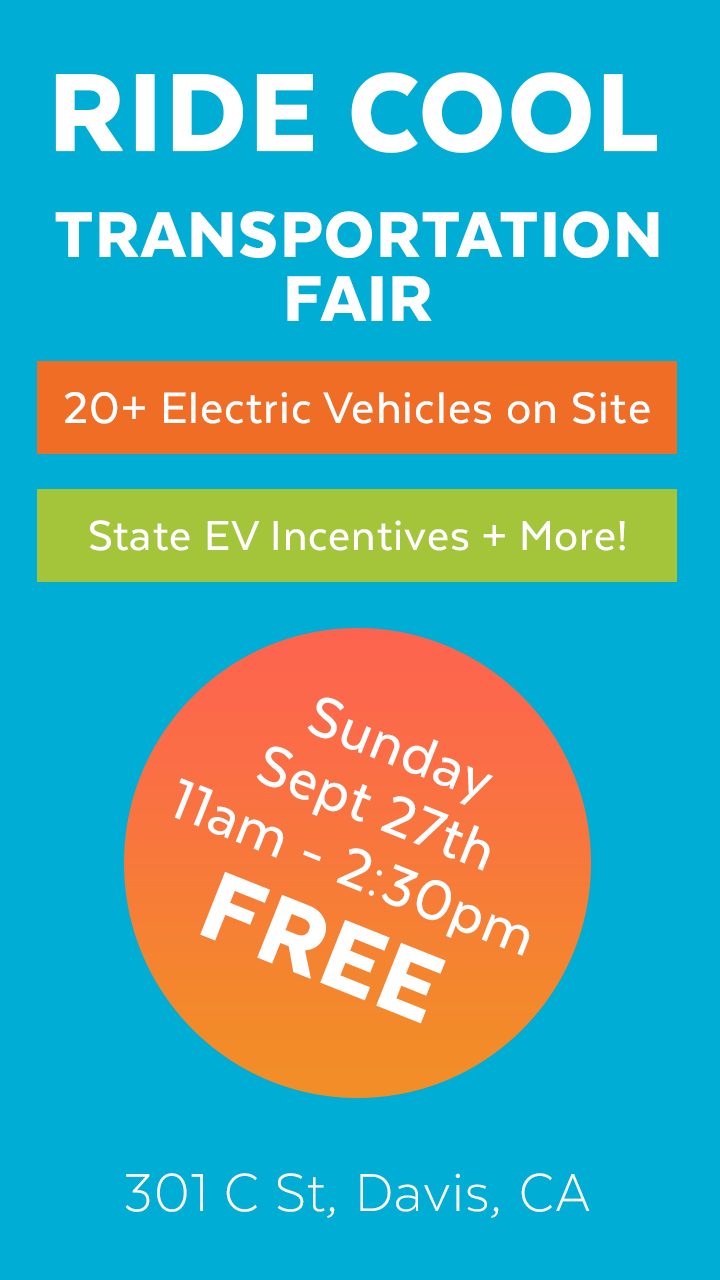
Curious about EVs? E-bikes? Want to learn about them without the sales pitch? Then come this Sunday to talk directly to owners and check out all the green transportation options in #Davis and #Yolo
Don't freak out, there's still time! Please give to help us meet our goal by midnight! #yoloca #bdog2024 #givebig2024 #nightowls https://www.bigdayofgiving.org/cooldavis

Thank you for helping us fly free with your evening donations (not easy in the dark ;) #yoloca #bdog2024 #givebig2024 https://www.bigdayofgiving.org/cooldavis

Yolo we are so close to our Big Day of Giving goal! Thank you for being on the move and helping us make a much needed $40,000 by midnight tonight! #yoloca #bdog2024 #givebig2024 @yolocommunityfdn https://www.bigdayofgiving.org/cooldavis

There's no masking your generosity! Reveal your true colors and support us today for Big Day of Giving! #yoloca! #bdog2024 #givebig2024 #mayisbikemonth https://www.bigdayofgiving.org/cooldavis

