
Climate Conversations: Climate is Still Front and Center
It was the year Apple launched the first iPhone, Amy Winehouse’s “Back to Black” album dominated global charts, and an unknown Sen. Barack Obama announced he would run for president. In 2007 John Mott-Smith also penned his first “Per Capita Davis” column in The Enterprise.
Inspired by Al Gore’s climate-change film, “An Inconvenient Truth,” Mott-Smith stated his intention to explore “what we, as individuals, and collectively as a city, could do locally to be part of a global effort to reduce greenhouse gas emissions.”
His wide-ranging columns ran for almost 20 years until his death in August. They explained climate science, analyzed renewable technologies, explored policy solutions in California and worldwide, and highlighted the local actions that could make a difference. While never underestimating the challenges, John always imbued his columns with a sense of optimism in our capacity to respond to the climate crisis.
Perhaps most importantly, he carved out a space in our local media – and thus in our community — for conversations on climate change. This was critical when fossil fuel companies were actively funding doubt about climate science or attempting to stop any regulations that would curb their profits — as they still do.
It was also necessary as transitioning our fossil-fuel based economy and society requires profound policy shifts that need to be discussed and debated. As many local environmental and political leaders have attested, John was deeply appreciated for this work and for his coordination of various local climate change efforts such as the Yolo Compact. His presence will be deeply missed.
The need for those conversations on climate change, though, have not gone away with John’s passing. The inconvenient truth today is that we are not going in the right direction. Our global emissions have risen 15% since John started his column. Global average temperatures are currently on track to rise by at least 2.6 degrees Celsius by the end of the century (4.7 degrees Farenheit), dangerously above the global target of 1.5 degrees Celsius set at the UN climate talks in Paris in 2015.
We are already witnessing the impacts here in California. The last 20 years have been the driest two decades in roughly a millennium. Half of the state’s ten largest wildfires on record have burned in the last decade. In Davis, we experienced directly the impacts of the 2020 LNU Lightning Complex Fire and 2018 County Fire in Berryessa that temporarily closed schools due to the dangerous air pollution. Families of Davis residents have lost homes in fires in Paradise and Los Angeles.
Such impacts — which will only grow — mean that we need to discuss not just how to reduce greenhouse gas emissions, but also how to adapt to global heating and protect everyone, especially those most vulnerable to its impacts. Climate change will impact everything we take for granted – how we source our food, our water, and our energy; how we live and travel; how we create jobs; and how our economy and society will run.
That’s why we came together as a small group of academics, energy and transport specialists, advocates and activists to propose a new monthly column, Climate Conversations, in the Enterprise and syndicated on Cool Davis’ website (www.cooldavis.org). We are grateful to the editor Sebastian Oñate for supporting us.
We want to build on John’s impressive legacy by opening up new conversations about the way global heating will shape our lives and our community in coming decades. We need to revive a sense of urgency in our local politics, that too often is happy to sit on the laurels of past achievements.
We need much greater social and political imagination, given that business as usual has brought us to this crisis and will not provide a path out. We need to hear from diverse voices, particularly those most impacted by climate change — such as young people, farm laborers, construction workers, unhoused people — and so we will be inviting many guest columnists to share this platform.
In coming months, you can expect columns on the Davis General Plan, data centers and AI, indigenous perspectives on ecology and more. We won’t have one line and we won’t always agree with each other, but we hope this new column will catalyze much needed debate and discussion. Ultimately we know that change won’t come from a column, but from public pressure, political organizing and delivering change at the local level.
What we can do is give voice to the ideas, analysis, and voices of those fighting for and delivering effective and just responses to the climate crisis. We hope you will join us on this journey. If you have ideas to share, please email us anytime at davisclimateconversations@mailbox.org.
This is written by Nick Buxton in a personal capacity. Climate conversations is a collaboration of Nick Buxton, Robin Datel, Ari Halberstadt, Lorenzo Kristov, Richard McCann and Stephen Wheeler with other advisors and supporters in the community. The commentary in this column does not necessarily represent the views of Cool Davis as an organization.
Follow Us


FACEBOOK FEED
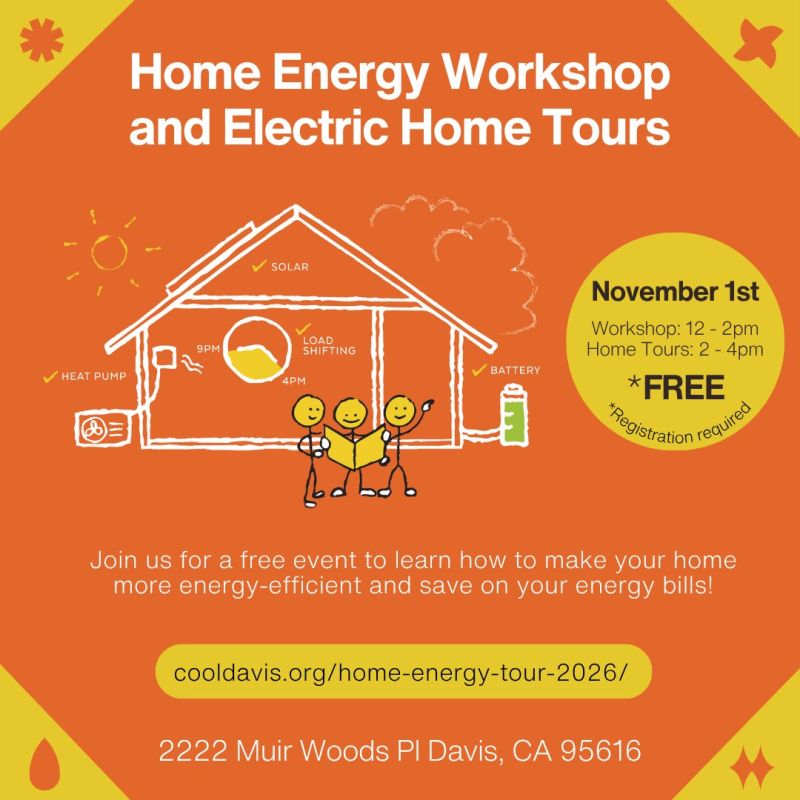
Join Cool Davis for a free Home Energy Workshop and Electric Home Tours on November 1st!
Registration required. Visit cooldavis.org/home-energy-tour-2026/ to learn more.
#cooldavis #davisca #EnergyEfficiency #CleanEnergy

0 CommentsComment on Facebook

TWITTER FEED


🎃 No tricks, just energy-saving tips!
Join Cool Davis this Sunday for a FREE Home Energy Workshop and Electric Home Tours. Discover how electric home upgrades can help reduce energy use and lower utility bills!
Register here:
https://www.cooldavis.org/home-energy-tour-2026/

Join Cool Davis for a free Home Energy Workshop and Electric Home Tours on November 1st!
Registration required. Visit https://www.cooldavis.org/home-energy-tour-2026/ to learn more.
#CoolDavis #DavisCA #EnergyEfficiency #CleanEnergy
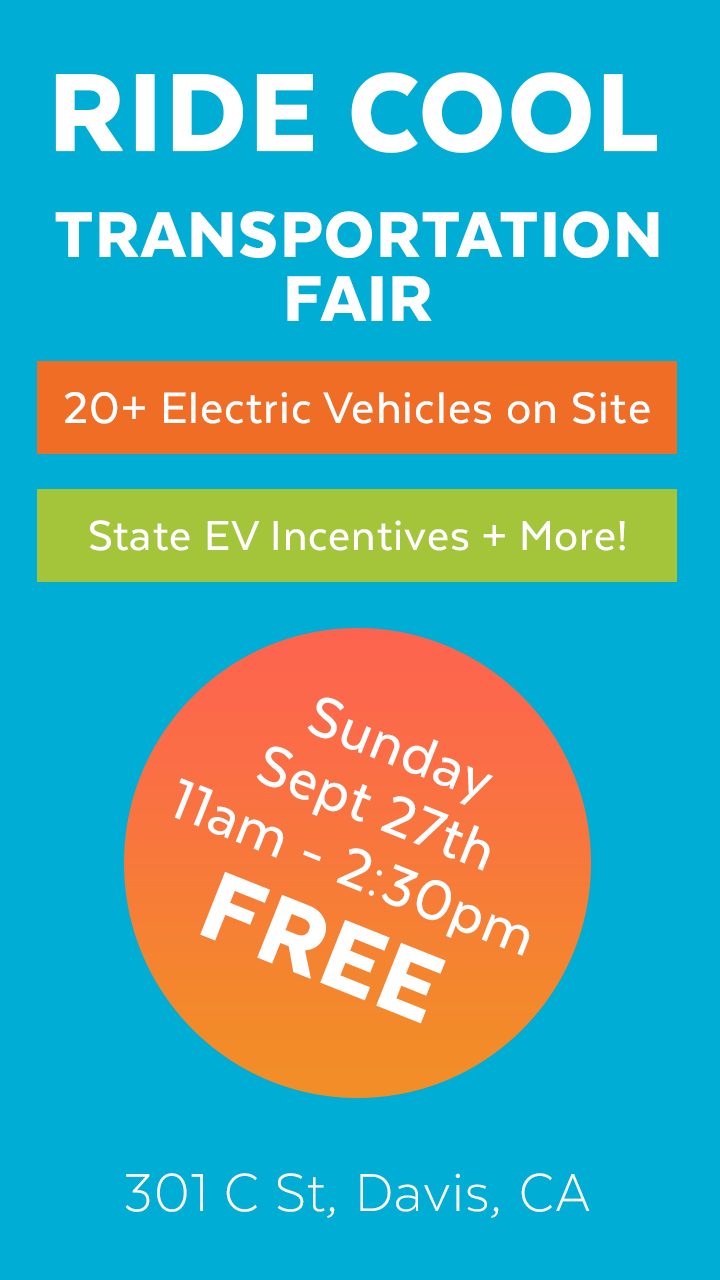
Curious about EVs? E-bikes? Want to learn about them without the sales pitch? Then come this Sunday to talk directly to owners and check out all the green transportation options in #Davis and #Yolo
Don't freak out, there's still time! Please give to help us meet our goal by midnight! #yoloca #bdog2024 #givebig2024 #nightowls https://www.bigdayofgiving.org/cooldavis

Thank you for helping us fly free with your evening donations (not easy in the dark ;) #yoloca #bdog2024 #givebig2024 https://www.bigdayofgiving.org/cooldavis