

Federal Energy Tax Credits Expire 2025: CA Incentives Still Available
A Guide to Clean Energy Incentives Before Key Deadlines
As of July 2025, many clean energy Federal incentives that have helped Americans cut home energy bills, electrify transportation, and develop renewable power are expiring or changing under new federal legislation signed earlier this month. However, incentives funded by the State of California are still in place.
If you’re considering a heat pump, solar panels, an electric vehicle, or even full home electrification, now is the time to act to maximize available savings and avoid missing out on valuable tax credits.
What You Need to Know About Clean Energy Tax Credits Today
Here are some tips on the most important clean energy tax credits, who qualifies, and how long each incentive will remain available under the recent changes:
Federal Home Energy & Efficiency Tax Credits
Solar, Wind, and Geothermal Systems: If you install clean energy systems at home including solar, wind, geothermal, fuel cells, or batteries, you can claim a credit. This program was supposed to run through 2035, but you now must complete installation by December 31, 2025 to get the current benefit.
Home Efficiency Upgrades: Homeowners who improve their home’s energy efficiency—such as by adding insulation, upgrading windows, or installing efficient heat pumps and appliances—may qualify for annual tax credits. These were available through 2033, but are currently set to end December 31, 2025.
New Energy-Efficient Homes: If you’re buying a newly built home, the builder may qualify for a tax credit if the home meets certain energy efficiency standards. While this isn’t something you apply for directly, it could affect home pricing or incentives. This program was active through 2033, but ends June 30, 2026 for current rules.
New Single Family Heat Pump Incentives Launched July 15, 2025
For single-family homeowners looking to electrify their heating and water systems, new incentives for Heat Pump HVAC systems and Heat Pump Water Heaters (HPWH) became available starting July 15, 2025.
These incentives are designed to accelerate adoption of energy-efficient, low-carbon technologies in single-family residences, helping reduce home energy costs and greenhouse gas emissions.
What You Need to Know:
The incentives will provide financial support for installing qualified heat pump heating, ventilation, and air conditioning (HVAC) systems.
Additionally, heat pump water heaters (HPWHs) will be eligible for rebates or credits to offset installation costs.
California Energy Smart Homes Incentives
The California Energy Smart Homes Program provides incentives for residential new construction and alterations that meet energy-efficiency and electrification standards. As noted above, new heat pump incentives became available on July 15, 2025.
The program is should continue through 2027, with no reductions to incentive levels expected. “If these projects are pushed to 2026, not to worry as Energy-Smart Homes has just confirmed that the program will continue through 2027 and the incentive levels will remain the same (see full details on the Alterations – California Energy Smart Homes page)!”
These incentives are ideal for homeowners undertaking home alterations that include HVAC or water heating system replacements with high-efficiency electric heat pump technologies.
The program does not accept projects converting from propane to electric.
More information can be found on the Alterations page of the California Energy Smart Homes website.
Tech Clean California Incentives
Tech Clean California is a statewide initiative that promotes the adoption of low-emissions, high-efficiency space and water heating technologies in homes.
The program offers rebates and resources for installing qualified Heat Pump HVAC systems and Heat Pump Water Heaters.
Homeowners can access:
-
Incentives for new installations
-
Support for project planning
-
A network of participating contractors
These rebates are designed to reduce upfront costs for transitioning to clean, electric technologies and are available in many utility territories throughout California.
Why Act Now?
Many of the existing federal incentives expire by the end of 2025 or mid-2026 — especially for home upgrades and electric vehicles. Taking advantage of current credits now means:
Lower upfront costs for electrification and clean energy upgrades.
Reduced home energy bills.
Supporting a transition to cleaner energy sources.
Plus, supply chain and foreign entity restrictions could limit eligibility for projects starting after 2025
Whether you’re a homeowner, business, or clean energy developer, understanding the updated tax credit landscape is critical to maximizing savings. With many incentives expiring soon, the time to plan and act is now.
Many home energy incentives end December 31, 2025, or mid-2026, and electric vehicle credits expire September 30, 2025.
Leverage this guide and connect with Cool Davis to make the most of the current opportunities — including the new heat pump incentives launching this summer.
Electric Vehicle (EV) Tax Credits for Individuals
New Electric Vehicles: If you’re buying a new electric vehicle, you may qualify for a federal tax credit. This program was available through 2033, but it ends early on September 30, 2025. To qualify, the vehicle must meet certain requirements, and income limits apply.
Used Electric Vehicles: If you’re buying a used EV that costs $25,000 or less, you could get a credit of up to $4,000. Like the new EV credit, this was also available through 2033 but ends on September 30, 2025.
EV Chargers (Home & Business): If you install an EV charging station at home or for your business, you may be eligible for a credit to help cover the cost. This incentive will only be available for infrastructure placed in service by June 30, 2026.
[Read more on EV incentives here]
Sources
- https://caenergysmarthomes.com/alterations/#alteration-incentives
- https://www.utilitydive.com/news/house-passes-senate-megabill-trump-ira-tax-credit/752276/
- https://www.canarymedia.com/articles/policy-regulation/senates-big-beautiful-bill-would-be-a-disaster-for-clean-energy
- https://www.canarymedia.com/articles/clean-energy/trump-big-beautiful-bill-industry-impacts
- https://grist.org/buildings/congress-is-killing-clean-energy-tax-credits-heres-how-to-use-them-before-they-disappear/
- https://www.canarymedia.com/articles/clean-energy/tax-credit-changes-trump-law
Follow Us


FACEBOOK FEED

TWITTER FEED


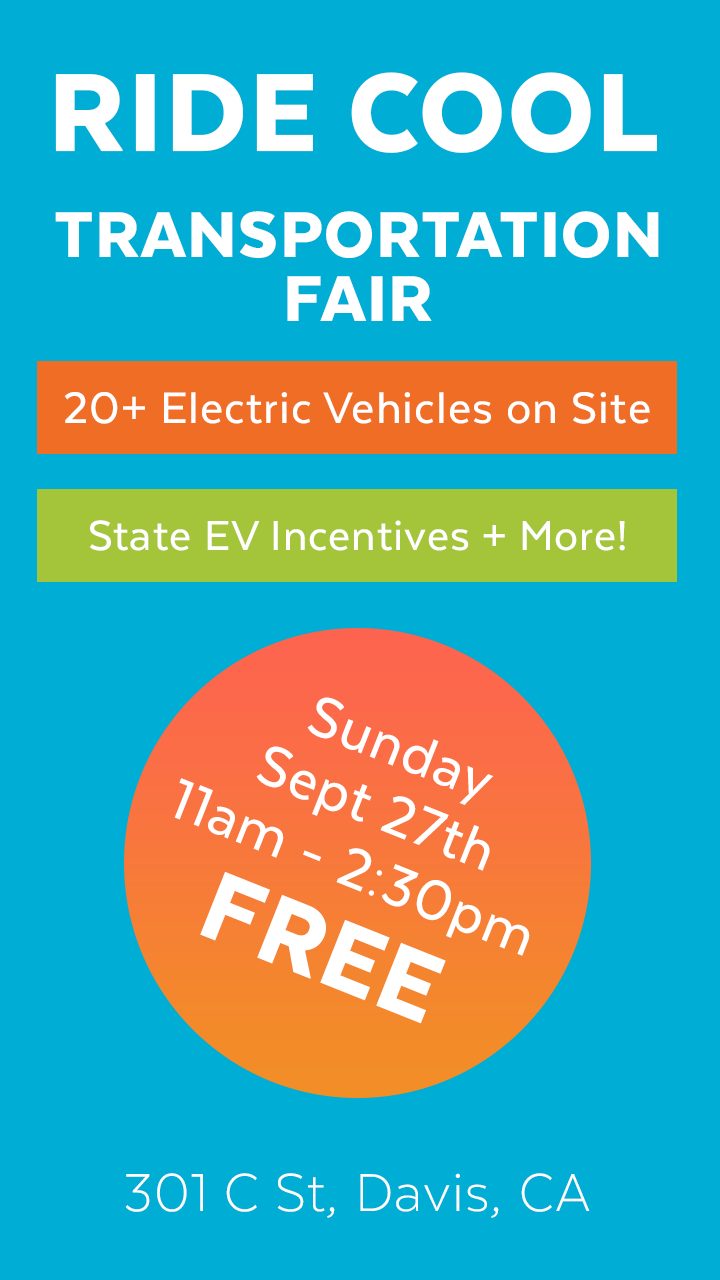
Curious about EVs? E-bikes? Want to learn about them without the sales pitch? Then come this Sunday to talk directly to owners and check out all the green transportation options in #Davis and #Yolo
Don't freak out, there's still time! Please give to help us meet our goal by midnight! #yoloca #bdog2024 #givebig2024 #nightowls https://www.bigdayofgiving.org/cooldavis

Thank you for helping us fly free with your evening donations (not easy in the dark ;) #yoloca #bdog2024 #givebig2024 https://www.bigdayofgiving.org/cooldavis

Yolo we are so close to our Big Day of Giving goal! Thank you for being on the move and helping us make a much needed $40,000 by midnight tonight! #yoloca #bdog2024 #givebig2024 @yolocommunityfdn https://www.bigdayofgiving.org/cooldavis

There's no masking your generosity! Reveal your true colors and support us today for Big Day of Giving! #yoloca! #bdog2024 #givebig2024 #mayisbikemonth https://www.bigdayofgiving.org/cooldavis

